Anthropology
Your guide to anthropology — cultural, physical, linguistic and archaeological studies.
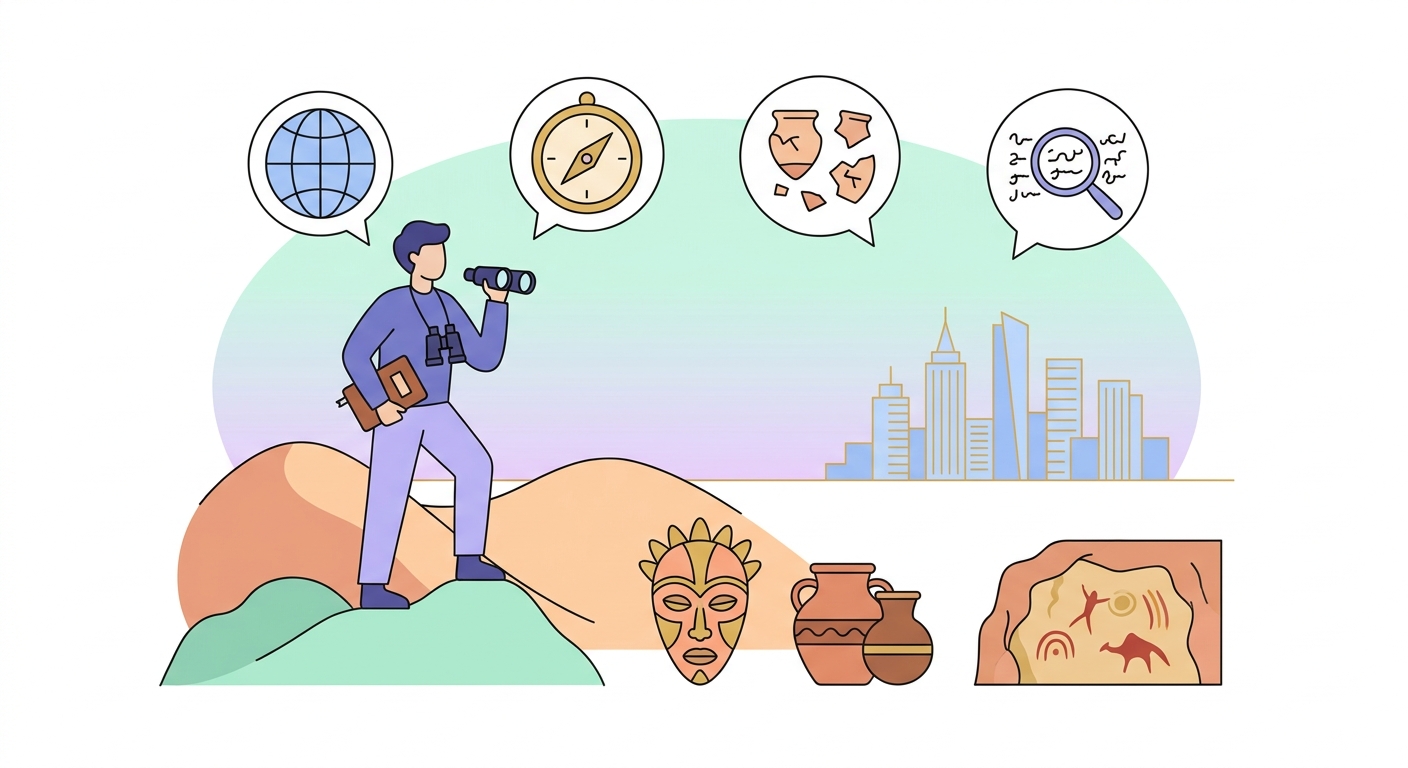
Your guide to anthropology — cultural, physical, linguistic and archaeological studies.
Anthropology is the holistic study of humanity — past and present. It examines human cultures, societies, biological development, and languages across time and space. Unlike other social sciences that may focus on a specific aspect of human life, anthropology takes a comprehensive view, connecting biological, cultural, and linguistic dimensions of the human experience.
Anthropology develops deep observational skills, cultural sensitivity, qualitative research expertise, and the ability to understand complex social systems — skills increasingly valued in a globalised world.
Anthropology is traditionally divided into four sub-disciplines:
Many modern programmes also include applied anthropology and medical anthropology as emerging fields that bridge academic research and real-world problem-solving.
Fieldwork is the hallmark of anthropological research. Ethnography — the systematic study of people and cultures through immersive observation — is anthropology's signature method. Ethnographic fieldwork involves living within a community, participating in daily life, conducting interviews, and building deep understanding over months or years.
Modern anthropologists also use digital ethnography (studying online communities), visual methods (photography, film), and mixed-methods approaches that combine qualitative depth with quantitative breadth.
Anthropology graduates bring unique skills to diverse careers. Common paths include: UX researcher, international development worker, museum curator, heritage manager, cultural consultant, forensic anthropologist, public health researcher, and community engagement specialist.
The demand for anthropological skills is growing in tech (UX research, design thinking), healthcare (medical anthropology), and business (consumer insights, cross-cultural management). Postgraduate study opens doors to academic and advanced research careers.